DACA remains limited and contested.
USCIS continues to accept initial and renewal requests. Under current court orders, however, it cannot approve initial requests or their related work authorization; it continues to adjudicate renewals.
Red, White, Blue & Green
Living as an American Without Recognition.
A child crosses into the country that will become home. Years later, America has shaped nearly every part of his identity except his legal recognition.
By Gregory L. Ewing · Reporting · Data · Visual storytelling
“I feel 100% American. I’m just not recognized as one.” — DanielBegin the story ↓
A life built here
Daniel was brought from Mexico to California at age seven. The memories that shaped his identity formed in American classrooms, libraries, cafeterias and neighborhoods.
He describes himself as culturally American and legally unrecognized. His story is not a stand-in for every undocumented immigrant. It is one reported life through which a national contradiction becomes visible.
The journey begins
The terrain develops around the reporting as the green line advances. This is an editorial visualization of distance and change, not a map of Daniel’s travel.
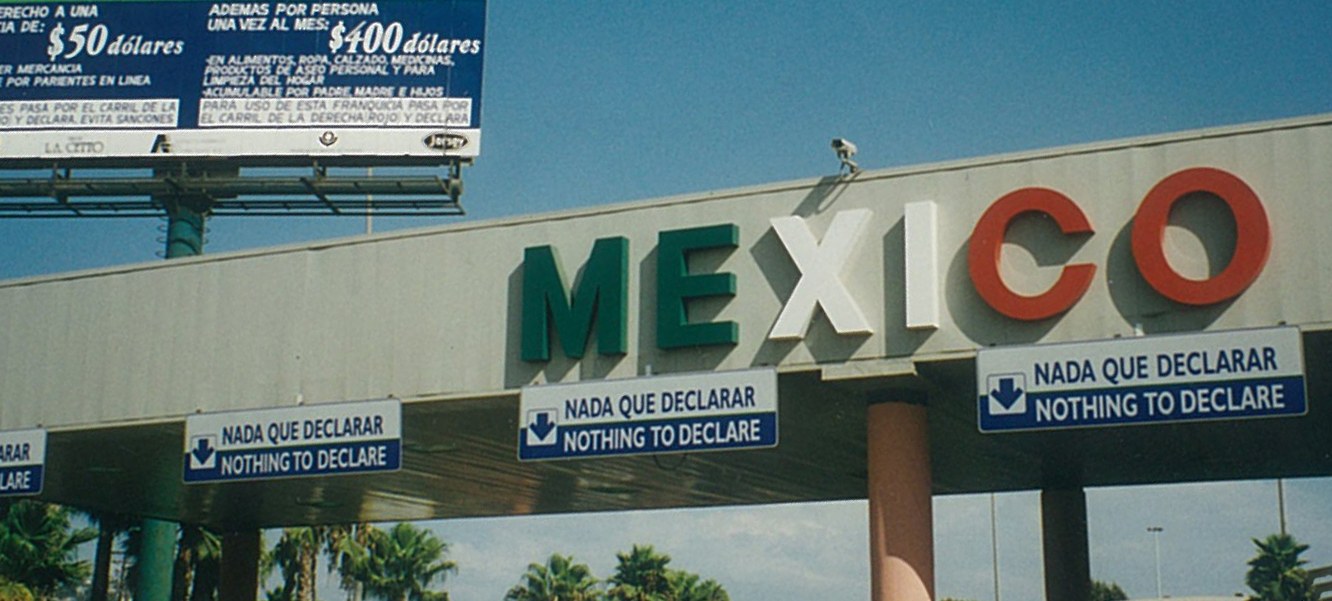

01 · Arrival
Daniel entered an American classroom without English. The help he needed also marked him as different: another person often had to stand beside him and translate what teachers said.
“Somebody always had to be around me to translate anything that was being said. I hated that because it was like walking in with a chaperone. I didn’t want to be the weird kid.”
Language progression
02 · Wanting to fit in
Within months, Daniel was reading more confidently. He remembers a teacher refusing to let him check out the same Harry Potter book his classmates could take home because she doubted his comprehension. He cried—not simply over a book, but over what the refusal represented.
“I cried … because I wanted to be where everybody else was. I wanted to fit in.”

Hear his story · 8:57
The recording is published under the pseudonym Daniel. It has been identity-protected, dialogue-balanced and gently cleaned while retaining the natural cadence of the interview.
Transcript note: This edited transcript follows the public audio. Protected names and identifying details are removed; the subject is called Daniel throughout. Punctuation and obvious speech-recognition errors were corrected for readability without changing meaning.
Narrator: On California’s coast, there is no fanfare and no spotlight—just a man doing what he has done for more than two decades: working with his hands, shaping metal and carving out a life in a country that still places him beyond legal recognition. Today, we step into his world: the sparks, the noise and the silence that follows. This is a conversation about resilience, identity and what it means to belong.
Gregory Ewing: Thank you for appearing in such a vulnerable state, especially now. When people ask where you are from, how do you answer? What does home mean to you?
Daniel: Home to me is America. I do not feel out of place. I do not feel like I do not belong here. I identify with American culture completely. Unfortunately, I do not resonate as much with the country where I was born. I was brought here at a very young age. Since I was seven, I have always thought the United States was my home—and California specifically.
Daniel: I am thankful for the work my mother did to get us here. It was not an easy road. In the middle of everything happening with protests, I see my American pride come out. When I see people burning American flags, it upsets me. It shows how Americanized I have become. I do not deny that I am Mexican, and I am not against the country where I was born. I simply have not lived there.
Narrator: Daniel also described the obstacles he faced in school.
Daniel: I remember taking my lunch because we had almost nothing. My mother put a couple of cookies in a bag and filled a pink cup with milk. In Mexico, school lunch was not something we had. When I reached school here, the food seemed amazing. I was always in line for extra food. I would finish and go back. I realized I was one of the only children doing that, because at home we did not have very much food.
Gregory Ewing: Tell me about the Harry Potter story.
Daniel: I started second grade in the United States knowing no English. There was a huge language barrier because I spoke only Spanish. Within a few months, I picked up English quickly and could read quite a lot. The first Harry Potter books were coming out and everyone had one. When I tried to take the book from the library, my teacher would not allow it. He said he knew I could read it but did not think I would comprehend the story. I had to return to the smaller books I had started with.
Daniel: I was so frustrated that I cried. Looking back, I know the teacher understood that I was not ready. He also saw how eager I was to be where everyone else was. I wanted to feel normal because everyone was reading that book. I wanted to learn English quickly because I wanted to fit in. I did not want to be the weird kid. At first, somebody always had to be around me to translate, and I hated that because it felt like walking around with a chaperone.
Narrator: Daniel’s identity, beliefs and way of life were shaped by growing up in America. He describes himself as American even while remaining undocumented. His story is one of millions: quiet, complicated and often ignored. Every shift and every spark asks something of the country—who is included, and who remains unrecognized?
Gregory Ewing: For Ewing Journal, I’m Gregory L. Ewing. Thank you for listening.
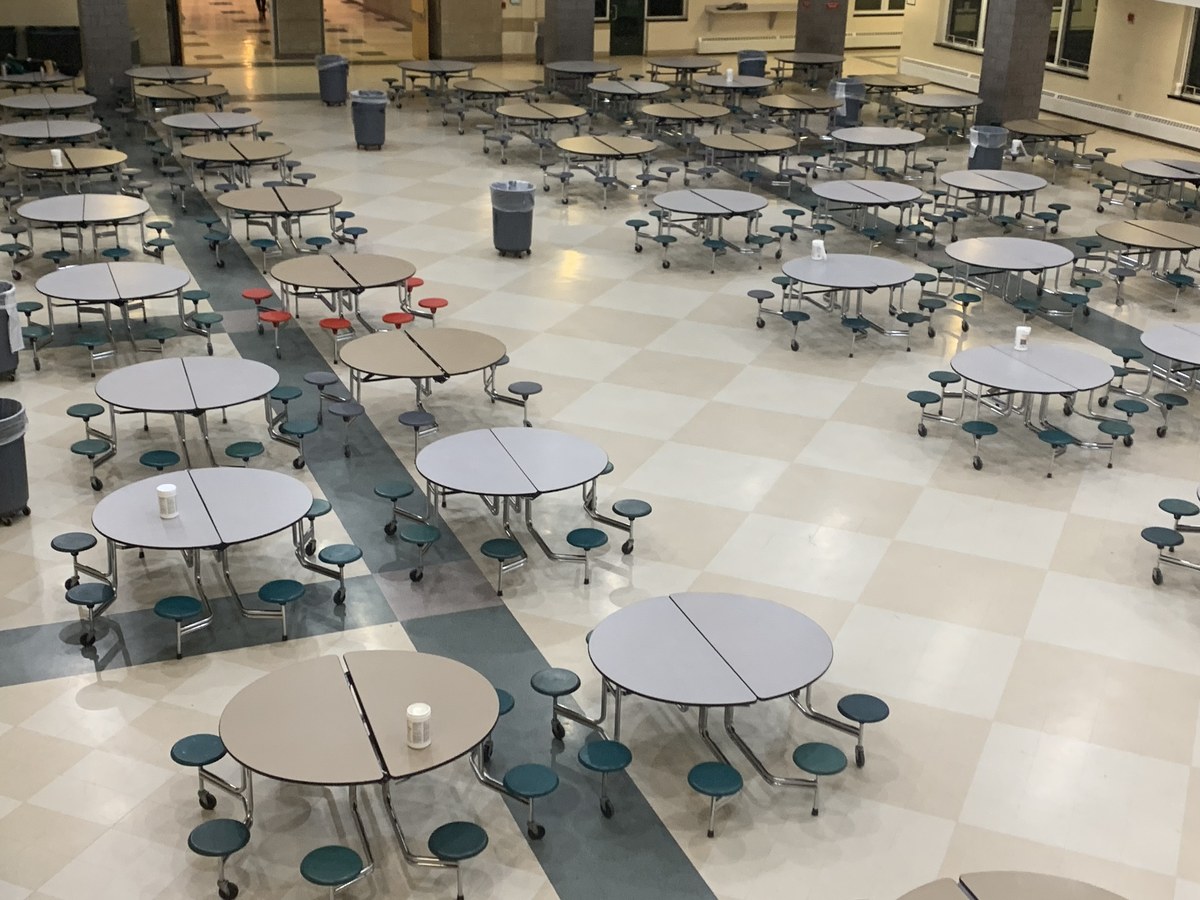
03 · More than a meal
Daniel remembers school in Mexico without a provided lunch and arriving in California with cookies and milk. The cafeteria meals amazed him. He returned for extra food because there was not much waiting at home.
“I was the only kid in line for extra food. At home, we didn’t have too much. So, for me, that extra lunch was everything.”
04 · American identity
Daniel grew up pledging allegiance at school, speaking English with friends and rooting for American sports teams. Books, classrooms and ordinary rituals folded him into the culture. Years later, the intensity of that attachment could surprise even him.
“When I see people burning the American flag, it kind of upsets me. It shows just how Americanized I’ve become.”
The daily experiences through which Daniel understands himself as American.
Citizenship and immigration status are legal categories, not measures of cultural belonging.

The central contradiction
Asked whether he considers himself American, Daniel’s response was immediate. “Yes, of course I’m American,” he said. “It just sucks to feel yourself 100% American but not be recognized as one. Because ultimately, at the end of the day, I’m an undocumented immigrant.”
His life took shape in American classrooms, neighborhoods and institutions, while the law assigned him to a different category. Identity and recognition did not develop at the same speed.
Daniel describes himself as a survivor and the American dream as something he has lived—not a slogan conferred by a document.
“This is where my American pride comes in. I can say, you know what, I am a survivor wherever I go. It wasn’t easy to get here, but I’m living the American dream. I can make it anywhere. But, legally speaking, I’m not recognized as an American.”
05 · Legal contradiction
“Dreamer” is a social and political term, not a status. DACA is a separate federal policy with specific eligibility rules; it can provide renewable deferred action and, for eligible recipients, work authorization. It is not citizenship, lawful permanent residence or a pathway to either.
That unresolved divide is the limbo Daniel describes: an ordinary American life accompanied by persistent fear and uncertainty about legal recognition. The original interview does not establish that Daniel is a DACA recipient or that he personally experienced a particular enforcement action. This edition does not make either claim.
The environment around the story
USCIS continues to accept initial and renewal requests. Under current court orders, however, it cannot approve initial requests or their related work authorization; it continues to adjudicate renewals.
A January 2025 executive order directed broader federal enforcement. The American Dream and Promise Act of 2025 remained at the introduced and committee-referral stage in this edition; a July 2026 discharge petition sought to force a House vote, but the proposal was not enacted law.
Federal enforcement directive ↗ · Congressional record ↗ · Discharge petition announcement ↗
Daniel reports childhood arrival, cultural belonging and legal uncertainty. His account does not disclose every fact required to evaluate immigration relief, so this feature does not assign him a remedy or predict an outcome.
Voices arguing for recognition
These positions provide political context; they do not speak for Daniel. Each summary links to the official proposal or statement it describes.
The lawmakers co-led the 2025 American Dream and Promise Act, which would create permanent protections and a route toward lawful permanent residence for eligible Dreamers and certain other immigrants.
Official announcement ↗The senators introduced the Dream Act of 2025, proposing a route to lawful permanent residence for eligible people brought to the United States as children.
Congressional record ↗Padilla has advocated updating federal registry law to provide a route to lawful permanent residence for qualifying long-term residents, including Dreamers.
Proposal overview ↗Newsom has argued that immigrants are central to California’s communities and economy while opposing federal enforcement actions he described as indiscriminate.
Official proclamation ↗Data in depth · United States
Pew Research Center estimates that 14 million unauthorized immigrants lived in the United States in 2023—the latest complete estimate in its updated series. One person’s story now opens onto a population measured in millions.
Human scale
1,400 marks × 10,000 people. The marks communicate scale; they do not encode individual attributes. Method and findings ↗
Source: Pew Research Center, Aug. 21–22, 2025. Pew says the 2023 estimate is the latest complete figure; preliminary evidence points to growth into 2024 and decline in 2025, but a complete post-2023 estimate was not available for this edition.
Economic record · 2022
Institute on Taxation and Economic Policy researchers estimated that undocumented immigrants paid $96.7 billion in federal, state and local taxes in 2022: $59.4 billion federally and $37.3 billion to state and local governments.
Back to one person
National estimates describe scale; they cannot substitute for Daniel’s account. His memories remain specific: the translator beside him, the book he could not take home, the lunch line, English with friends, American sports, the flag and the unresolved distance between identity and paperwork.
“I can say, you know what, I am a survivor wherever I go. It wasn’t easy to get here, but I’m living the American dream.”
Home
“Home to me is America. I don’t ever see myself going back. All I know is the United States. All I know is home.”
— Daniel
Practical information · Separate from the narrative
These plain-language definitions are starting points, not legal advice. Immigration eligibility depends on a person’s complete facts, history and current law.
A broad descriptive term for a person in the United States without current lawful immigration status. It can include people who entered without inspection and people who remained after authorized status expired.
Deferred Action for Childhood Arrivals is a federal policy under which certain eligible people may receive renewable deferred action and work authorization. It is not citizenship, permanent residence or a pathway to either.
A social and political term commonly used for some immigrants brought to the United States as children. It is not a formal immigration status and is not identical to being a DACA recipient.
A person authorized to live permanently in the United States, commonly called a green-card holder. Permanent residents may be eligible to apply for naturalization if they meet separate requirements.
A form of protection for people who meet the legal definition of a refugee and satisfy other requirements. Applications and defenses are evaluated under specific facts and deadlines.
A temporary protection that may be designated for eligible nationals of certain countries experiencing specified conditions. TPS does not by itself create permanent residence.
Immigration-court proceedings in which the government seeks a person’s removal from the United States. People may have defenses or relief depending on their circumstances.
Permission to work in the United States, generally documented by an Employment Authorization Document. Eligibility is tied to specific immigration categories or pending matters.
The process through which an eligible person already in the United States may apply for lawful permanent residence. Not everyone present in the country is eligible.
The legal process through which an eligible lawful permanent resident may become a U.S. citizen after satisfying statutory requirements.
Resources · Know your rights · Find help
Sources & methodology
This multimedia edition is grounded in Gregory L. Ewing’s original Aug. 15, 2025 article and recorded interview. “Daniel” is a pseudonym. Context photographs do not depict Daniel’s school or route. The geographic sequence is illustrative, and the article’s earlier national estimates were replaced with newer verified figures that retain their reference years.