Art · Curatorial Research
Dendro
Judaeology
Objects across Jewish time: a digital art book drawn from Gregory L. Ewing’s exhibition research at The Magnes Collection of Jewish Art and Life.
Enter the collectionCuratorial introduction
A timeline made of objects
A date fixes an event in place. An object does something more complicated: it carries material, touch, migration, belief and interpretation forward at the same time.
DendroJudaeology began inside a 2025 research archive for a Jewish timeline project at The Magnes in Berkeley. Gregory L. Ewing reviewed and cataloged collection records, compared possible objects and wrote interpretive notes that asked what each work could contribute beyond illustration.
This digital edition follows that method. Five encounters move from origin and ritual to representation, landscape and social reality. The sequence is intentionally quiet. The artwork leads; the captions and observations remain close enough to orient the reader without closing down meaning.
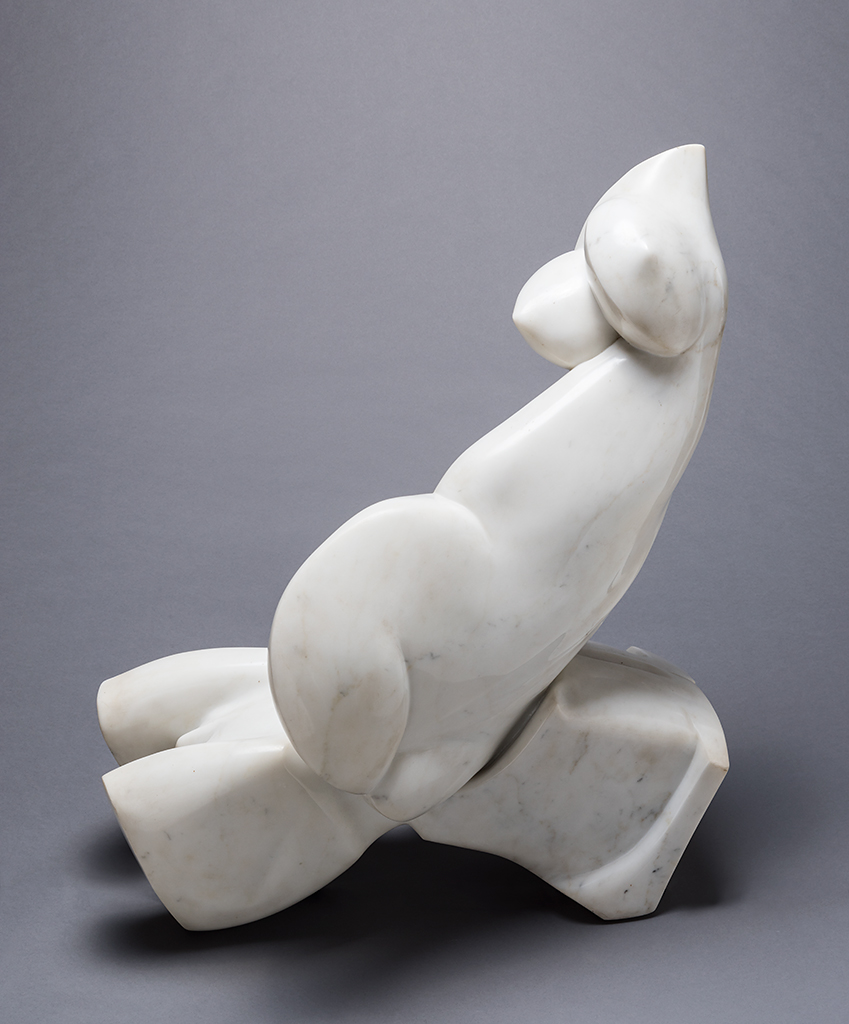
United States, 1969
Marble
The Magnes Collection, 98.11.2
Weinberg turns creation into a physical act of becoming. A vertical figure rises from a reclining form, giving Eve presence, momentum and agency. Ewing’s research selected the sculpture because it shifts attention away from temptation and toward emergence: personhood taking shape in stone.
17th century
Metalwork
The Magnes Collection, 76.228
The six-pointed star sits at the center of an object made for domestic sacred time. Here, symbolism is not an abstract emblem detached from life; it is held within lighting, memory and repetition. The lamp’s compact scale makes its historical density more striking.
Material culture keeps history close enough to touch.Ewing Journal Art · Exhibition research principle
Original photograph circa 1875; offset-lithograph postcard, 1984
The Magnes Collection, 92.74.5
Two sitters face a camera that does not preserve their names. The Magnes object adds another layer: it is a later postcard made from a nineteenth-century photograph. Ewing’s selection keeps those layers visible, asking readers to consider Sephardi identity, colonial image-making and the distance between a person and the archive that comes to represent her.
Israel, 20th century
Oil on canvas
The Magnes Collection, 86.51
A small figure stands against a field of blue, close to the water yet psychologically distant from it. The landscape is less a map than an interior condition. In Ewing’s research, the painting offered an emotional counterpoint to institutional narratives of land, settlement and nation-building.
1930–1940
Postcard
The Magnes Collection, 2014.0.9.24
Jerusalem, 1930–1940
Postcard
The Magnes Collection, 2014.0.9.519
The Jaffa image makes arrival feel collective and future-facing. The Wailing Wall image turns toward poverty, ritual and the unequal conditions that idealized progress can leave outside the frame. Read together, they show why Ewing selected the second image for the timeline research: it resists a clean story and restores social complexity.
Museum and further exploration
Continue through the archive
The Magnes describes its holdings as a “library of objects,” bringing art, ritual material, photography, archives and books into one interdisciplinary collection. These pathways lead to the museum, its current catalog and institutional resources about several artists in this feature.
Sources and methodology
What this feature is, and is not
This is an independent Ewing Journal digital adaptation of Gregory L. Ewing’s 2025 exhibition research for a Jewish timeline project at The Magnes Collection of Jewish Art and Life. It is not an official Magnes exhibition, museum catalog or statement of institutional endorsement.
- Object titles, makers, dates, media and accession numbers derive from the project’s Magnes collection records and Ewing’s object-research documents.
- Interpretive passages are concise editorial adaptations of Ewing’s curatorial analyses and selection notes.
- Collection photography reproduced here comes from the source records embedded in that research archive. Readers can use the accession numbers in the Maven catalog for current museum metadata.
- External institutional links are reviewed and open in a separate tab.